
The best smart-lighting choice often begins with who reaches for the switch.
A bedroom light may need to fade to a warm glow for reading, then change colour for a slow wake-up routine. That kind of personal, adjustable lighting suits a smart bulb such as the Tapo L530E—especially when one lamp serves several moods.
A busy kitchen, hallway, or living room asks something different: anyone entering should be able to press the wall control and get light immediately. A Tuya Smart WiFi Wall Switch keeps that familiar habit intact while automating a fixed ceiling fixture. Many frustrating setups come from fitting flexible bulbs into a shared room where somebody will cut their power at the wall, or installing a switch where colour and per-lamp control were the real appeal. The right choice follows the fixture, the room’s routine, and the people using it.
- Smart bulbs need continuous wall power to stay available in an app or voice assistant.
- A smart wall switch can control several standard bulbs on one circuit.
Match the control to how the room is used
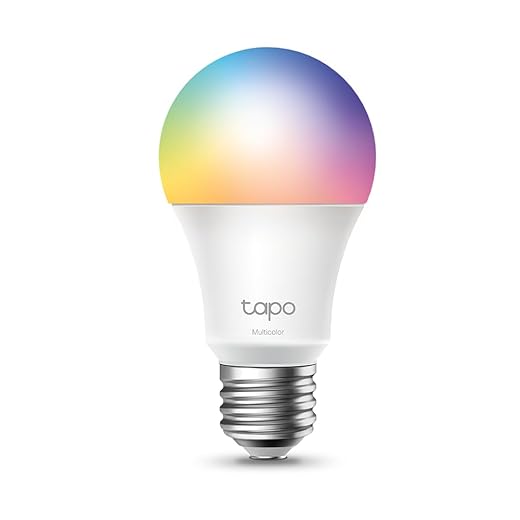

| Flexible accent lighting Tapo L530E Color Smart Bulb With Alexa | VS | Fixed ceiling lighting Tuya Smart WiFi Wall Switch For Alexa |
|---|---|---|
Bedroom, nursery, corner | Best rooms | Kitchen, hall, garage |
App, voice, scenes | Everyday control | Wall switch, app, voice |
3 | Color and dimming | 1 |
1 | Installation effort | 3 |
– | Approx. price | – |
| Check price | Check price |
Decide What the Room Needs First
- Fixture and wiring
A wall switch makes most sense for built-in ceiling lights, chandeliers, and other fixtures that should work as one system. A plug-in lamp or a single bedside fitting is usually simpler to upgrade with a bulb.
Choose whenFixed fixtures used by everyone in the room.Think twice whenChanging a switch solely to control one movable lamp. - The kind of light change wanted
Dimming and colour are different jobs. A smart dimmer can lower compatible white lights; colour scenes, warm-to-cool white tuning, and per-bulb effects require smart bulbs. Check whether the existing LEDs are suitable for dimming before fitting a dimmer.
Choose whenBulbs for colour; a compatible dimmer for smooth brightness control.Think twice whenExpecting a standard smart switch to add colour. - A control that still works by hand
A smart switch keeps familiar wall control for guests and for anyone who does not use an app. Smart bulbs need continuous power, so an ordinary wall switch can accidentally take them offline.
Choose whenA switch where the wall control is the room’s default.Think twice whenSmart bulbs behind a switch that is often turned off. - How many bulbs share the circuit
One smart switch can control several bulbs together, which is usually better value on a multi-lamp fixture. Individual bulbs earn their cost when each light needs its own brightness, schedule, or colour.
Choose whenA switch for grouped lighting; bulbs for independent zones.Think twice whenBuying several colour bulbs when they will always act alike.
Where smart bulbs make more sense
Smart bulbs are the easier fit for bedside lamps, floor lamps, reading lights, and decorative fixtures. They install without opening a wall box, so they are useful in rentals and in rooms where changing the wiring would be disproportionate to the result. The Tapo L530E Color Smart Bulb With Alexa is the kind of low-cost option that makes this approach practical for a single lamp or accent light.
A multi-bulb fixture can also become more useful when each bulb has its own job. One bulb might provide warm, dim light for evenings, while another is set brighter for reading; coloured bulbs can stay subtle as a background accent rather than lighting the whole room blue. This is control a wall switch cannot provide on its own.
The catch is simple: a smart bulb needs continuous power. If someone turns off the lamp switch or wall switch, the bulb goes offline until power is restored. For lamps, leaving the physical switch on and using the app, voice control, or an optional wireless button avoids that frustration.
For a lamp used by guests or children, add a small label or fit a smart button nearby. A bulb that is frequently cut off at the switch often feels less reliable than it really is.
Low-cost color control for a lamp or accent corner
Best for colorful, affordable room lighting
The Tapo L530E is an inexpensive Wi-Fi color bulb for making one lamp, bedside table, or display shelf more flexible without rewiring the room. Its adjustable white light can shift from a clearer daytime setting to a warmer evening glow, while color scenes give a small zone a more deliberate mood.
It makes most sense where the bulb is visible or has a distinct job—not as a substitute for a room-wide lighting plan. For a broader look at competing ecosystems, see Hue and Govee options for room-by-room lighting.
- Low upfront cost
- No hub required
- Color and tunable white
- Schedules and app control
- Up to 806 lumens
- Wall switch must stay on
- One bulb covers one socket
- Not ideal for large fixtures
- Requires 2.4 GHz Wi-Fi
Quick take A practical first smart bulb for a single, always-powered lamp. It adds more atmosphere than a basic smart switch at very little cost, but does not simplify control of a whole fixture.
For roughly €8, this is an easy way to test scenes, dimming, and white-temperature changes in a small part of a room. Use it in a lamp that remains powered at the wall; otherwise, app and voice control disappear whenever someone flips the switch.
A multi-bulb ceiling fitting is usually better served by a smart switch or a more carefully planned bulb setup. Check that the bulb base and voltage suit the fixture before buying.
A smart wall switch replaces the control for an entire hardwired circuit. One tap, voice command, or schedule can operate every compatible bulb on that circuit, while the familiar wall control still works for guests, children, and anyone without the app. That makes it a natural fit for halls, kitchens, bathrooms, and living rooms with several ceiling lamps.
For example, a Tuya Smart WiFi Wall Switch can turn a bank of ordinary LED downlights into one connected zone. It is usually less fiddly—and often less expensive—than fitting and managing six separate smart bulbs. For a switched circuit, standard dimmable LEDs are generally the sensible pairing; colour smart bulbs such as the Tapo L530E need continuous power to stay connected and are better left on an always-live lamp.
Check the installation before buying
A switch choice starts inside the wall box, not in an app listing. Confirm:
- Neutral wire: many smart switches require one at the switch location.
- Box depth: the module and wiring need physical room behind the faceplate.
- Load compatibility: check LED wattage limits and whether the model is a relay or dimmer.
- Multi-way wiring: two- or three-way circuits may need a specifically supported switch.
Turn off power at the breaker and verify the circuit is dead before any inspection. If wiring labels, neutral identification, or the box condition are uncertain, installation is a job for a qualified electrician.
When the wall switch cuts power, a smart bulb goes offline and cannot respond to schedules or voice control. Keep smart bulbs continuously powered, or use a switch setup designed for smart-bulb mode.
A smart wall switch for the ceiling circuit
Best for upgrading existing ceiling lights
The Tuya Smart WiFi Wall Switch is aimed at a permanent ceiling fitting rather than a single decorative lamp. It replaces the familiar wall control, so a kitchen, hall, or shared living room can keep one obvious way to operate the entire circuit while adding app schedules and voice control.
This one-gang model is most at home where several standard bulbs belong to the same switch. Its claimed neutral-wire and no-neutral installation options make it worth investigating in both older and newer homes, but the actual wall box and local electrical setup remain the deciding factors.
- One control for every bulb on the circuit
- Physical switch remains familiar to guests
- Schedules and remote control suit routine lighting
- Claims support for neutral and no-neutral wiring
- Usually needs work inside the wall box
- One circuit cannot set bulbs independently
- Not useful for plug-in lamps
- No-neutral setups may need the included capacitor
Quick take A sensible upgrade when the room needs dependable shared control, not colour scenes at each bulb.
For a fixed ceiling circuit, a single smart switch can be better value than buying several smart bulbs: every ordinary bulb on that circuit becomes part of the routine. Manual control still works as expected, which matters in busy shared spaces.
Check the circuit type, neutral-wire arrangement, box depth, load rating, and regional electrical suitability before ordering. Installation is a poor trade-off for most renters; a smart bulb or plug-in smart lamp is the easier route there.
- Map the fixture
A bedside lamp, pendant, and multi-bulb ceiling fitting should not automatically receive the same control.
- Count the bulbs
One coloured bulb is inexpensive; replacing six or eight bulbs can make a circuit-level switch the sensible starting point.
- Save colour for atmosphere
Use colour bulbs where scenes matter: reading lamps, gaming corners, children’s rooms, or accent fixtures.
- Keep the wall control useful
In halls, kitchens, and shared bathrooms, a smart switch lets anyone turn the fixed lights on without an app or voice command.
- Check the installation first
A missing neutral, shallow wall box, rental restrictions, or uncertain wiring can rule out a wall switch.
- Consider the people in the room
Personal spaces tolerate app-led bulb control; busy shared spaces benefit from familiar wall behaviour.
Choose the control that matches the room
- A mixed setup often works best: a switch for the main ceiling circuit and bulbs for lamps or accents.
Treat smart bulbs as the tool for a light’s personality—colour, warmth, and individual moods. Treat smart switches as the tool for a room’s daily behaviour—reliable grouped lighting and a wall control everyone can use.
For fixed, high-bulb-count shared lighting, start with the switch. For always-powered lamps and small personal zones, start with the bulb.
